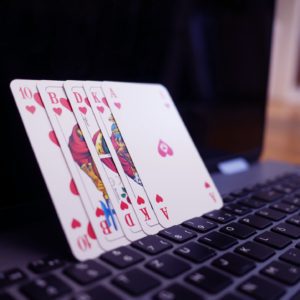
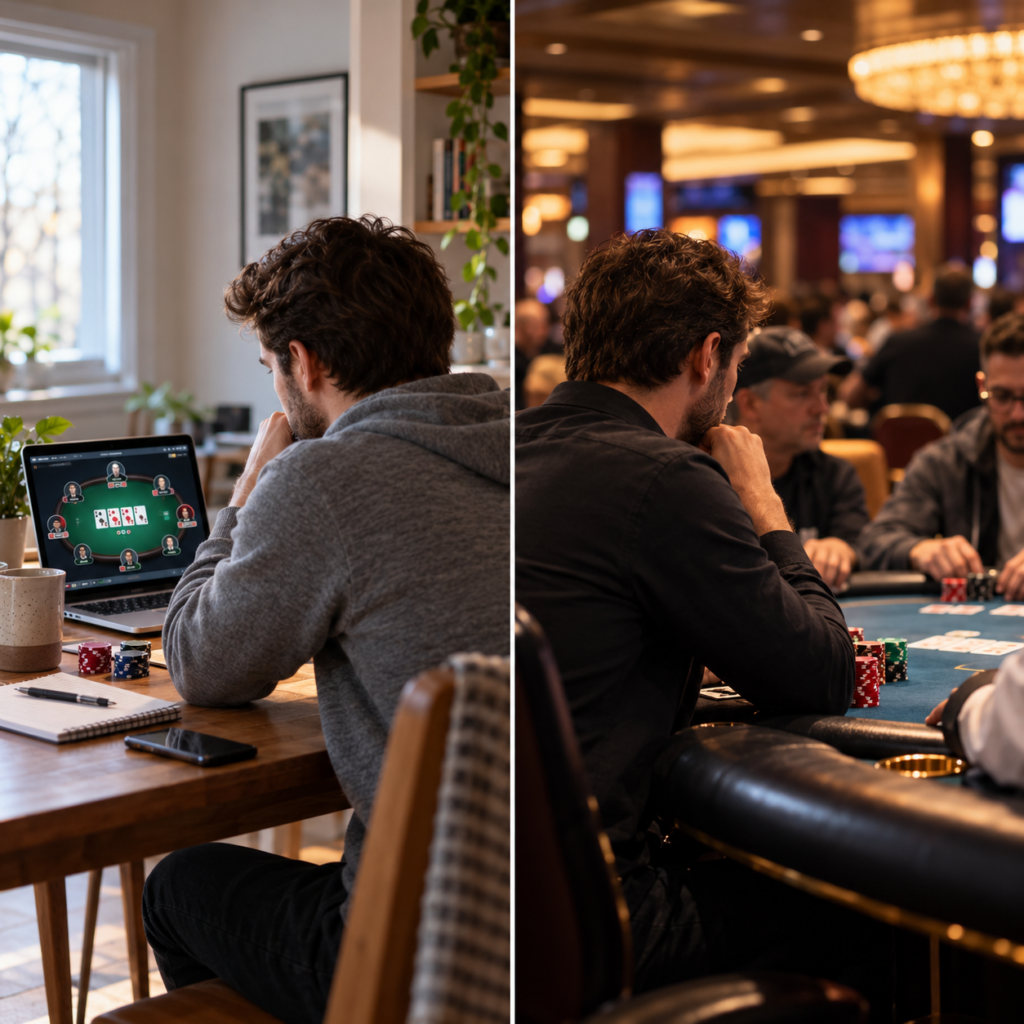
Online poker has one particularly helpful habit: it refuses to let you act out of turn. The blinds appear where they should, the pot updates itself and the buttons available on screen change as the action moves around the table.
None of that happens quite so neatly when someone sits down in a poker room for the first time. The rules haven’t changed, but some of the work has moved from the software to the player. That makes online practice useful in a fairly specific way. It can make the poker familiar before the live-table routine is.
Some Parts of Poker Get Easier Through Repetition
A Hold’em hand moves quickly once the cards are dealt. Two hole cards arrive, action moves around the table and then three community cards land on the flop. By the turn and river, both the board and the decisions around it may look completely different. Grand View Research estimates that Texas Hold’em accounted for more than 62% of the global online poker market in 2024.
Take a player holding two hearts when two more appear on the flop. A third heart on the turn completes a flush. Recognizing that hand, and knowing it beats a straight but loses to a full house, becomes quicker after seeing similar boards repeatedly. The button moves after every hand, so a player repeatedly experiences the difference between acting early and waiting to see what several opponents do first. Eventually, “on the button” means more than remembering a term from a rules page.
Free Play Can Make the Basics Less Distracting
After enough hands, the same situations start coming back: a raise from early position, a marginal hand on the button, a flop that suddenly completes a draw.
Free poker platforms give beginners a chance to get comfortable, practise hand rankings, betting sequences and position. Replay Poker, which is covered in Casino.org’s guide to online poker at no cost, offers play-money tables and tournaments where players can build that familiarity through regular practice.
The point isn’t to prove that someone can beat a casino game or guarantee that online results will carry across to a live table. If recognizing two pair or following a pre-flop raise has already become routine, there is less basic information competing for attention during a first live session.
The Screen Is Quietly Helping You
Online poker doesn’t merely provide hands to practise with. The software also does quite a lot of housekeeping.
Blinds appear automatically. The pot is counted. Community cards arrive in the correct sequence and available actions appear on screen. A player cannot casually jump ahead because they have misunderstood whose turn it is.
It’s easy to stop noticing those guardrails. Live poker hands require more attention to the mechanics around the decision. A player has to watch where the action is, keep track of the bet, handle chips and make an intended action clear. Clicking a button marked “Raise” leaves little room for confusion. Moving chips forward at a physical table requires the player to understand what is happening without the interface translating the decision for them.
There are smaller adjustments too. Online, the exact size of the pot is displayed continuously. Live, a player may have to reconstruct previous bets from memory and the chips in front of them. Online cards cannot accidentally be exposed, folded prematurely or left unprotected. At the table, managing the physical hand becomes part of playing it. A 2026 feature on why poker practice still matters looks at the same gap between understanding a decision away from the table and making it when the pressure is on. Online hands provide plenty of chances to repeat those decisions, even if the physical routine still has to be learned separately.
Reading the Board Transfers Better Than Reading the Room
Board reading is one of the cleaner skills to carry from a screen to felt. A paired board is still paired. A third heart still creates the possibility of a flush. Four connected cards can still make a straight possible, and an opponent who called earlier before suddenly raising is still giving the player new information to consider.
At a live table, conversation, chip movements and other players are suddenly part of the scene. That doesn’t mean a newcomer needs to become an expert in physical tells. Betting history, position and the cards on the board haven’t stopped mattering simply because opponents are now sitting a few feet away. Online practice is particularly useful here because it gives players repeated opportunities to ask the same basic question: what changed when that card arrived?
Knowing the Game Isn’t Quite the Same as Feeling at Home
American Gaming Association research from 2025 found that 30% of US adults surveyed had gambled at a physical casino during the previous year. Sitting down in a poker room for the first time is still its own experience. There are chips to manage, dealer instructions to follow and live action to track without a highlighted button appearing on screen.
None of that is quite the same as sitting down, looking around the table and realizing that nobody is going to flash a prompt when it’s your turn. The dealer might still have to remind a newcomer that the action is on them. Ideally, they won’t also need reminding what happens next.