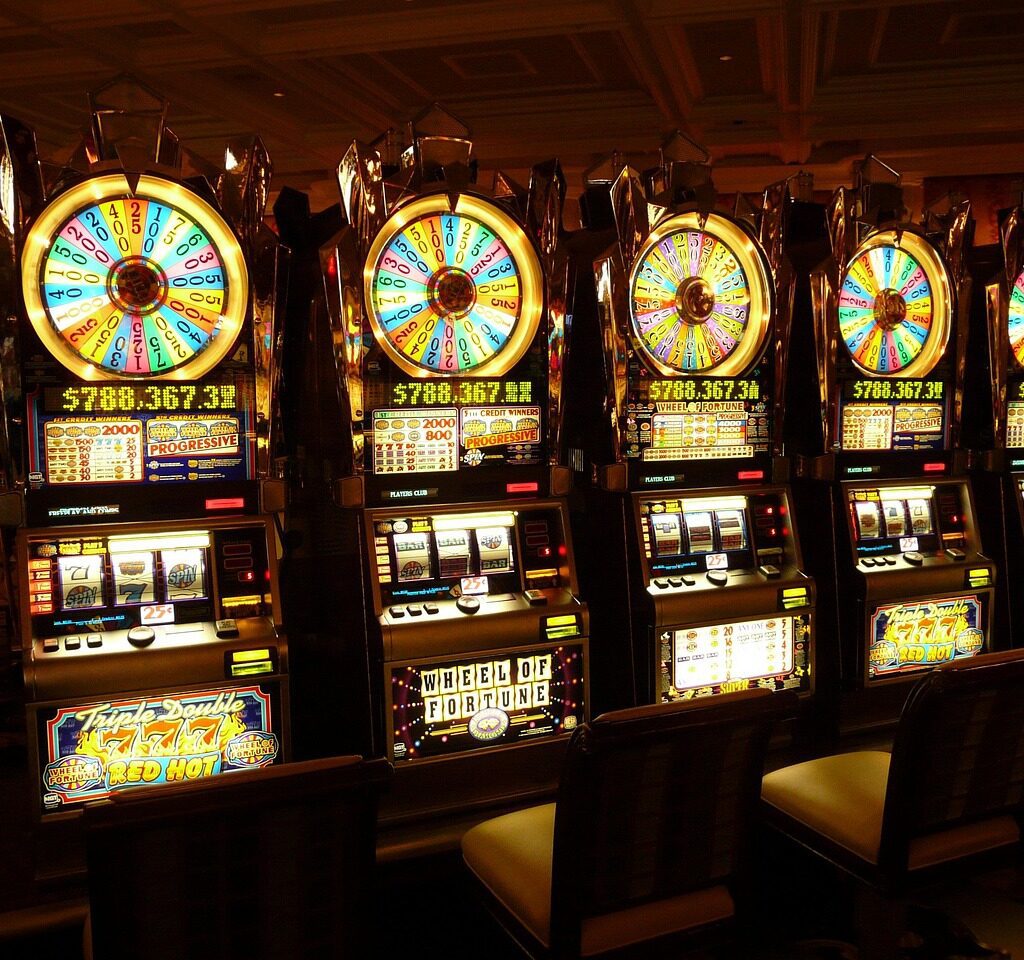
Progressive jackpot slots are games in which the top prize can increase as qualifying wagers are placed. The growing jackpot meter displayed on the screen is supported by a structured prize-pool system rather than rising arbitrarily.
Depending on the game, a portion of qualifying wagers may be added to a jackpot shared by one machine, several games on the same platform, or a wider network of participating casinos. The prize continues growing until it is won or reaches any cap specified in the game rules.
This article explains how progressive jackpot prize pools work, including wager contributions, jackpot networks, seed values, triggers and resets. These systems follow predetermined mathematical rules, and no strategy can guarantee a jackpot win or make a specific outcome predictable.
What Is a Progressive Jackpot Slot?
A progressive jackpot slot features a top prize that can increase over time. As eligible wagers are placed, a small contribution may be added to the jackpot pool according to the rules and mathematics of the game.
This differs from a fixed jackpot, which remains at a predetermined amount rather than increasing as additional wagers are placed.
Progressive slots usually display a jackpot meter showing the current prize. The figure may update as qualifying wagers are recorded across the connected game or network. It normally continues growing until someone wins the jackpot or the prize reaches a stated maximum.
The jackpot is separate from many of the slot’s regular payouts. A player may still receive base-game wins, bonus prizes or smaller jackpot tiers without winning the main progressive prize.
How the Progressive Jackpot Prize Pool Works
A progressive jackpot typically follows a recurring cycle:
- The jackpot begins at a predetermined seed or reset value.
- Players place qualifying wagers on the connected game or network.
- A portion of eligible wagers may contribute to the jackpot pool.
- The displayed prize increases as further contributions are recorded.
- A qualifying game outcome triggers the jackpot.
- The accumulated prize is awarded according to the game rules.
- The jackpot resets to its stated starting value and begins growing again.
For example, imagine a game contributes 2% of each qualifying wager to its jackpot. If a player stakes £1, then £0.02 would be added to the prize pool. Across thousands of wagers, these small contributions can produce a much larger jackpot.
This is only an illustrative example. There is no universal contribution percentage for progressive slots. Rates can vary according to the provider, game design, network structure and operator configuration.
Some jackpot systems may also allocate contributions between several prize tiers rather than placing the full amount into one top prize.
Standalone, Local and Networked Jackpot Pools
The size and growth rate of a progressive jackpot are influenced by the number of games and players contributing to it. Progressive systems usually fall into three broad categories.
Standalone progressive jackpots
A standalone jackpot is attached to one specific game or physical machine. Only qualifying wagers placed on that game contribute to the prize.
Because fewer wagers are involved, standalone jackpots may grow more slowly than prizes connected to larger networks. However, the exact starting value and growth rate depend on the individual game.
Local progressive jackpots
A local progressive links several games or machines within one casino, platform or location. Qualifying wagers from the connected titles contribute to a shared jackpot.
Since multiple games feed the same pool, the prize may grow faster than a standalone jackpot.
Networked progressive jackpots
A networked or wide-area progressive can connect games across multiple casinos or online platforms. Eligible wagers from the wider network contribute to one shared jackpot.
These systems can produce large headline prizes because they receive a greater volume of wagers. However, the size of the network or jackpot does not automatically improve an individual player’s chances of winning.
How to Compare Progressive Jackpot Slots
The largest displayed jackpot is not necessarily the only factor worth considering. Before playing, users should review:
- Whether the jackpot is standalone, local or networked
- The current value shown on the jackpot meter
- Any minimum or qualifying wager requirements
- The number of jackpot tiers available
- The game’s theoretical Return to Player percentage
- The stated volatility level
- The paytable and regular prize structure
- The method used to trigger the jackpot
- Whether specific features or paylines must be active
- The game’s compatibility with the player’s preferred device
Players can explore 7bet slots to compare different themes and formats, but they should open each game’s information screen to confirm whether it includes a progressive jackpot and what qualifying-stake, RTP, volatility and trigger rules apply.
A large prize should not distract from the underlying game conditions. Understanding how eligibility works is particularly important because some jackpots may be available at any qualifying stake, while others require a specific wager or feature.
What Are Seed Values, Resets and Jackpot Caps?
The seed value is the predetermined amount from which a progressive jackpot begins. It is also commonly the amount to which the jackpot returns after someone wins.
For example, a jackpot with a £100,000 seed value may begin at £100,000, increase through qualifying contributions and then reset to £100,000 after a payout.
The way the seed amount is funded can vary between operators, software providers and jackpot networks. It should not automatically be assumed that one particular party supplies the full amount.
Some progressive systems also have a jackpot cap. This is the maximum amount the prize is permitted to reach. Once the cap is reached, the displayed jackpot may stop increasing. The game rules should explain how any further contributions are handled.
Many modern slots use multiple jackpot levels, such as:
- Mini
- Minor
- Major
- Grand
Each tier may have its own starting value, contribution rate, trigger and reset rules.
How Progressive Jackpots Are Triggered
There is no single trigger method used by every progressive jackpot slot. The winning condition depends on the individual game’s design.
Symbol-based triggers
Some jackpots require a particular combination of symbols to appear on an eligible spin. The symbols may need to land on a specific payline or in a particular reel position.
Bonus-feature triggers
Other jackpots are awarded through a bonus feature. Players may need to enter a jackpot wheel, pick-and-win round or another dedicated feature.
Entering a bonus round does not necessarily guarantee the main jackpot. The feature may contain several possible prize levels.
Random or mystery triggers
A mystery jackpot may be awarded independently of the visible reel result. The prize can be triggered according to the game’s internal rules without requiring a specific symbol combination.
Must-drop jackpots
A must-drop jackpot must be awarded before it reaches a stated monetary limit or, in some cases, before a specified deadline.
The rules should clearly identify the relevant threshold. Although the prize is guaranteed to drop before that point, players still cannot reliably predict which qualifying wager will trigger it.
Jackpot results are governed by the game’s approved rules and underlying software. A rising meter does not create a dependable method for identifying the winning spin.
How Progressive Jackpots Affect RTP and Volatility
Return to Player, or RTP, is a long-term theoretical percentage calculated over a very large number of plays. It does not predict what one player will receive during an individual session.
In some progressive slots, part of the theoretical return is connected to the jackpot. This means the published RTP may include both:
- Returns from regular base-game and bonus outcomes
- The theoretical value associated with progressive jackpot prizes
Because the largest jackpot is awarded infrequently, most players will not experience the game exactly as the long-term RTP figure suggests during a short session.
Many progressive slots are also highly volatile, meaning larger prizes may occur less frequently. However, volatility depends on the complete mathematical design of the individual game. A slot should not automatically be classified as highly volatile simply because it contains a progressive jackpot.
Players should check the game information screen for the stated RTP, volatility and jackpot rules rather than assuming that all progressive slots operate in the same way.
Common Progressive Jackpot Myths
Several misconceptions can lead players to misunderstand how progressive prizes work.
“The jackpot is due to pay”
For standard RNG-based slots, previous reel outcomes do not make a particular result “due”. A long period without a jackpot does not mean the next spin is guaranteed or significantly more likely to win.
Must-drop jackpots are different because they must be awarded before a stated limit. Even then, players cannot identify the exact qualifying wager that will trigger the prize.
“A larger jackpot means better odds”
The size of the prize and the probability of winning it are separate factors. A higher jackpot meter does not automatically change the predefined chance of triggering the award.
“The maximum stake always improves the odds”
Some games require a particular stake to qualify for the top jackpot, but this is not a universal rule.
Placing the maximum wager should not be assumed to improve the odds unless the game information explicitly explains that eligibility or probability changes with the stake.
“A jackpot cannot be won again soon after resetting”
Once a jackpot is won, the prize usually returns to its seed value. Another qualifying win may occur soon afterwards, depending on the rules and random outcomes of the game.
A recent payout does not prevent the jackpot from being triggered again.
Responsible Play: Treat Jackpots as Entertainment
Progressive jackpots should be treated as entertainment rather than an investment or reliable source of income. The large prize displayed on the screen does not remove the risk of losing money.
Players should:
- Set a spending limit before beginning
- Choose a firm session time
- Avoid chasing previous losses
- Never borrow money to gamble
- Avoid increasing wagers simply because the jackpot is large
- Check eligibility requirements before placing a bet
- Stop once the planned budget has been reached
Players experiencing difficulty controlling their gambling should use the responsible-gambling tools provided by the operator and seek support from a recognised gambling-support organisation.
Progressive jackpot slots and other real-money gambling products are intended only for people aged 18 and over.
Frequently Asked Questions
Where does progressive jackpot money come from?
A progressive jackpot normally begins with a predetermined seed value. Depending on the system, a portion of qualifying wagers may then be added to the prize pool as players use the connected game or network.
What happens after someone wins the jackpot?
The prize is awarded according to the individual game’s rules. The jackpot normally resets to its predetermined seed value and begins increasing again through further qualifying contributions.
Do all wagers contribute the same amount?
No. Contribution rules vary between games and jackpot networks. The amount added to the pool may depend on the stake, provider, game configuration and eligibility conditions.
Must players place the maximum bet to qualify?
Not always. Some progressive slots require a specific or maximum wager, while others make the jackpot available at multiple stake levels. Players should check the paytable and game information before playing.
Is a jackpot more likely to pay when the meter is high?
A higher displayed prize does not automatically mean the next wager is more likely to win. Players should check the individual rules, particularly for must-drop jackpots that must be awarded before a stated limit.
Can players predict when a progressive jackpot will be won?
No dependable method can predict the precise winning spin. Jackpot outcomes follow the rules and mathematics of the individual game, and previous results do not provide a reliable forecast of the next outcome.